Filbert vs Hazelnut: Is There a Difference?
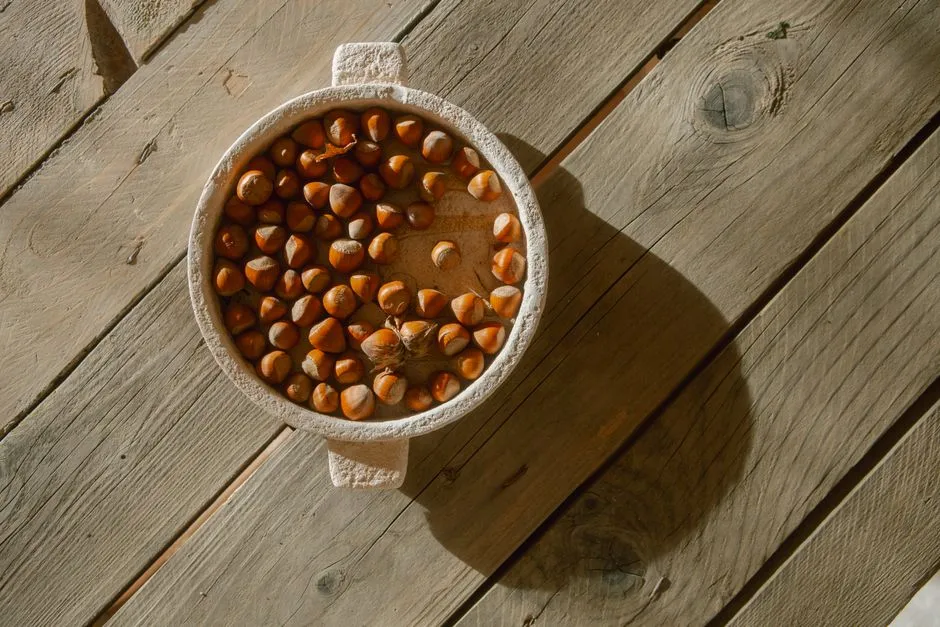
- Filbert and hazelnut are two names for the same pantry nut
- Filbert vs hazelnut at a glance
- Why Oregon still says filbert
- The name's origin is not settled
- What Oregon growers actually grow
- How to read a package
- Do filberts taste different?
- Raw, roasted, and blanched are real distinctions
- How to substitute in a recipe
- Buy for freshness
- Cold storage protects the oils
- Use the name your reader knows
Filbert and hazelnut are two names for the same pantry nut
In Oregon grocery stores, farm stands, and recipes, “filbert” and “hazelnut” refer to the same general ingredient. Oregon's commercial orchards grow the European hazelnut, Corylus avellana, and either common name may appear on a label or in a family recipe.
The words do not separate two flavor grades or shapes. A large round kernel and a smaller pointed one may be different cultivars, but calling one filbert and the other hazelnut does not make that distinction. For baking, match the form—raw, roasted, salted, chopped, or ground—rather than worrying about which of the two names appears first.
Filbert vs hazelnut at a glance
| Question | Answer |
|---|---|
| Same culinary ingredient? | Yes, in ordinary US use |
| Different botanical family? | No; both refer to Corylus nuts |
| Main Oregon commercial species | European hazelnut, Corylus avellana |
| Different flavor by name? | No; cultivar and processing matter |
| Safe for a hazelnut allergy? | No; filbert is another hazelnut name |
| Interchangeable in recipes? | Yes, when form and weight match |
Why Oregon still says filbert
Filbert has deep roots in Oregon's hazelnut-growing vocabulary. The name appears in older recipes, orchard language, family businesses, place names, and agricultural terms. “Hazelnut” became the dominant national consumer label, but regional speech did not change overnight.
The Oregon hazelnut industry's historical account says the Oregon Filbert Commission began emphasizing “hazelnut” in 1981 to align with common market usage. That was a naming decision, not the introduction of a new crop. Filbert remained perfectly understandable, especially in the Willamette Valley.
You may therefore encounter all of these:
- filbert orchard;
- hazelnut grower;
- filbert meal;
- Oregon hazelnuts;
- hazelnut (filbert) kernels.
They can all describe products from the same kind of tree. Read the rest of the label for the useful differences.
The name's origin is not settled
Two explanations for “filbert” circulate. One links the word with St. Philibert and a traditional feast date near the nut's ripening season in Europe. Another traces it to a German term meaning “full beard,” a reference to husks that cover some varieties.
Oregon State University Extension presents both explanations rather than declaring one proven. That is the honest version: the culinary meaning is clear, while the etymology remains debated.
“Hazelnut” comes from the older name for hazel trees and became the broader English market term. Common plant names often overlap this way; botanical names are more precise when species matters.
What Oregon growers actually grow
OSU Extension identifies Corylus avellana, the European hazelnut, as the species grown in Pacific Northwest commercial orchards. Within that species are cultivars selected for traits such as disease resistance, yield, kernel shape, flavor, and how readily the skin releases after roasting.
That variety detail explains real differences between bags better than filbert versus hazelnut. Two Oregon hazelnut cultivars can differ in size or blanching while both remain filberts. Nuts grown elsewhere can belong to the same species and use the hazelnut label.
Wild and ornamental Corylus species also carry common names including hazel and filbert. A landscape plant label is not a guarantee that its nuts were grown, processed, or handled as food. Buy baking nuts from a food supplier.
How to read a package
Ignore the front-label naming debate and check five practical details:
- Whole, chopped, or ground: pieces expose more oil to oxygen and stale faster.
- Raw or roasted: roasting changes flavor and may shorten storage life.
- Blanched or skin-on: blanched kernels have most papery skin removed.
- Salted or flavored: these are not neutral one-for-one baking nuts.
- Pack date and storage: fresh, well-sealed stock beats a prestigious name left warm for months.
An ingredient list may say hazelnuts even when the product name says filbert. For allergy purposes, treat the two words as the same tree nut. Do not use a “filbert” label as a loophole around medical advice or an allergen statement.
Do filberts taste different?
Not because of the name. Flavor comes from cultivar, freshness, growing conditions, roast level, and storage. Good raw kernels taste mild and sweet. Roasting creates a deeper aroma and more pronounced nut flavor. The thin brown skin can add slight bitterness, though complete skin removal is neither necessary nor always possible.
OSU Extension describes good kernels as smooth, crisp, and cream-colored inside, without shriveling or spots. A bitter, paint-like, soapy, or stale flavor can signal rancidity as the oils oxidize. Visible mold or decay means the nuts should be discarded.
Taste one before adding a whole bag to dough. Sugar and chocolate can mask early staleness long enough to ruin a finished batch.
Raw, roasted, and blanched are real distinctions
Raw hazelnuts have not been intentionally roasted. They work when the recipe includes a later bake, but a cookie's interior may not toast them as evenly as a separate roasting step.
Roasted hazelnuts have deeper flavor and a crisper texture. Roast before chopping so small pieces do not burn. Our guide to toasting hazelnuts gives oven and skillet methods plus the towel-rub technique for loose skins.
Blanched hazelnuts have most of their brown skin removed, often through processing beyond a simple home roast. They give pale cakes, pralines, and nut flours a cleaner appearance. Skin-on nuts remain suitable when color and a little bitterness are welcome.
Do not assume roasted means salted. Check the ingredient list. Salted snack nuts can throw off a pastry formula and may be roasted in an oil that changes flavor.
How to substitute in a recipe
If a recipe calls for filberts and your bag says hazelnuts, substitute equal weight in the same form. Weight avoids the air gaps that make cups of whole and chopped nuts fundamentally different.
Match:
- raw kernels with raw kernels;
- roasted with roasted, or roast the raw nuts first;
- whole with whole before following the recipe's chopping step;
- unsalted with unsalted;
- skin-on or blanched when appearance matters.
Hazelnut flour or meal cannot automatically replace whole nuts or wheat flour. Grinding releases oil, changes water absorption, and removes the structure supplied by wheat gluten. Use it only in a formula written for ground nuts or as a modest flavor addition that has been accounted for.
Hazelnut spread is another ingredient entirely: it usually contains sugar, fat, and other solids. A spoonful cannot replace a spoonful of plain ground nuts without changing sweetness and consistency.
Buy for freshness
The newest Oregon crop generally reaches market in fall, but harvest date alone does not determine quality. OSU Extension says properly stored hazelnuts can maintain good quality for about a year after harvest. Temperature, shelling, roasting, and package integrity all change that window.
For in-shell nuts, reject cracked, moldy, or damaged shells. The kernel remains hard to judge until opened, so ask how the crop was stored. For shelled nuts, choose intact packaging from a seller with regular turnover.
Avoid bags with excessive dust, shriveled pieces, moisture, visible mold, or a broken seal. Once home, taste and smell before dividing the package for storage.
Cold storage protects the oils
Hazelnuts contain oils that oxidize and become rancid. Cold, airtight storage slows that change. OSU Extension recommends refrigeration or freezing for longer quality and notes that nuts keep better in the shell than shelled. Roasted and chopped nuts are more vulnerable because heat and extra surface area expose the oils.
For home storage:
- seal kernels in an airtight container or freezer bag;
- press excess air from flexible packaging;
- label the form and date;
- refrigerate for regular use and freeze larger reserves;
- portion before freezing so the main bag opens less often;
- let a closed container warm before opening to reduce condensation on cold nuts.
OSU reports that well-sealed roasted hazelnuts can retain quality in the freezer for roughly six months to a year or longer. Treat that as a quality range, not permission to ignore odors, flavor, or freezer damage.
Use the name your reader knows
In a modern recipe title, “hazelnut” is the clearest search term. In an Oregon story, “filbert” carries local voice and history. A good first reference can use both: “Oregon hazelnuts, traditionally called filberts.” After that, choose one and stay consistent.
The simple answer survives all the history: filbert and hazelnut are interchangeable names in the kitchen. Spend your attention on freshness, roast, salt, grind, and storage—the differences that actually change a bake.
For more ingredient technique, visit Northwest Pantry, or pair toasted nuts with a slice of marionberry pie.